
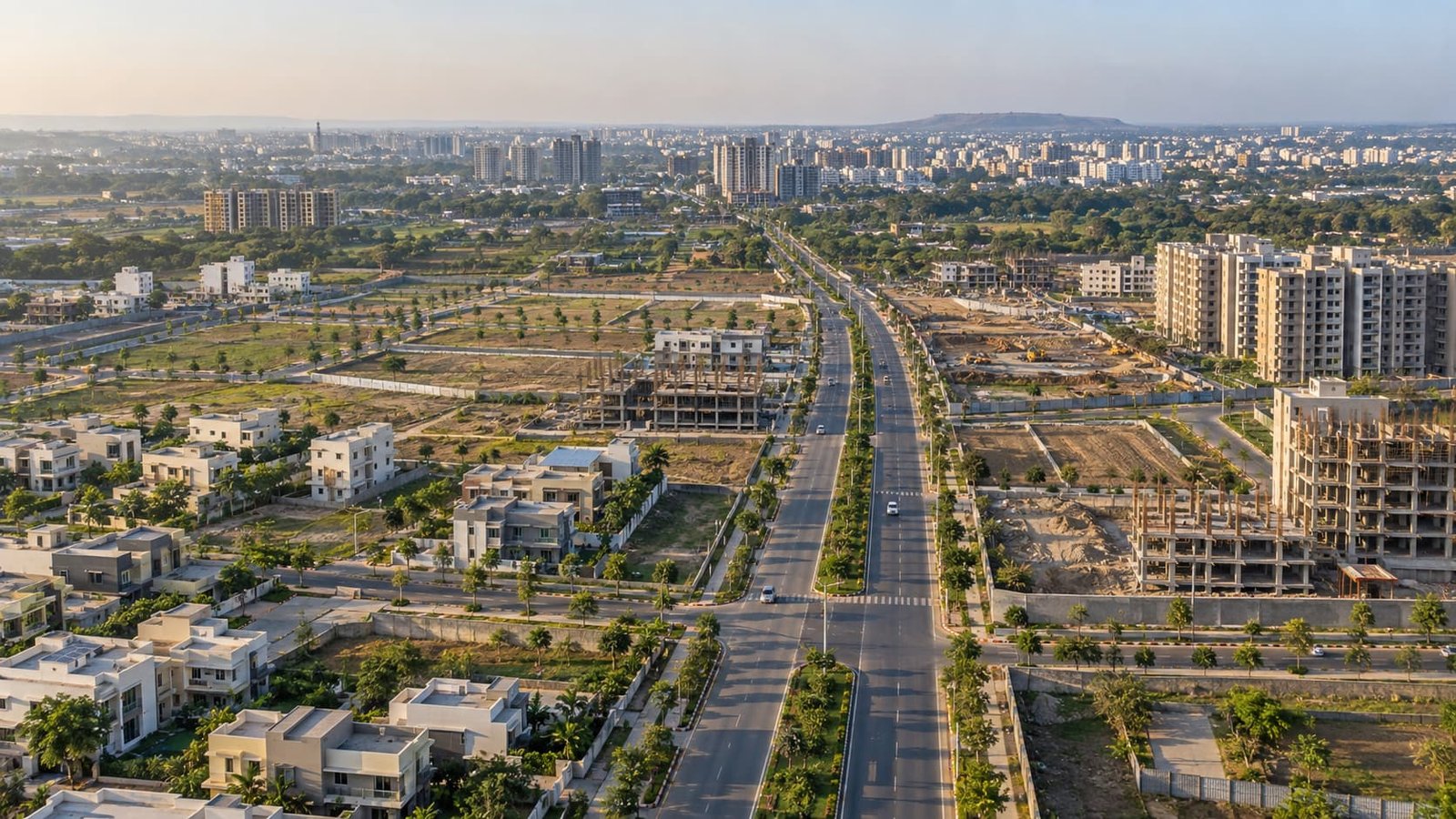
More transactions are happening. But that doesn’t mean every property has suddenly become a better investment.
Here’s an interesting real-estate contradiction. Earlier in 2026, Indore’s property market was showing signs of slowdown. Then came the latest registration data. Between April and July 2026, Indore recorded 58,549 property documents, compared with 53,925 during the corresponding period of the previous financial year. That’s an 8.5% increase. Registration revenue also increased from ₹719.43 crore to ₹820.41 crore — about 14% higher. (The Times of India) So… Is Indore’s real-estate market getting stronger? The honest answer is: There are signs of stronger transaction activity — but the story is more nuanced than "the market is booming." And that distinction matters if you’re planning to buy property.
First, Understand What Registration Data Tells You
Property registrations tell us something useful: People are transacting. That’s important. It indicates market activity. But registrations don’t tell us everything. They don’t automatically tell us:
- whether prices will rise
- whether a specific project is good
- whether investors are making money
- whether affordability is improving
- whether every locality is performing equally
Think of registrations as: A market activity signal. Not: A guaranteed investment signal.
Where Is Activity Moving?
The latest Indore data shows that transaction activity has been particularly strong in several developing and outer areas, including:
- Super Corridor
- Kanadia
- Bypass
- Piplyahana
- Bicholi Mardana
- Devguradia
- Rau
- Rangwasa
- Hatod
The registration department indicated that developing zones and colonies adjoining municipal limits were driving much of the activity, while some older central areas saw softer activity. (The Times of India) That’s a very interesting signal. Because it suggests: Indore’s property story is increasingly about urban expansion.
But Here’s the Important Counterpoint
Earlier in 2026, Indore had experienced a slowdown. One report based on registration department data showed nearly a 10% decline in sale deeds compared with the previous year, with affordability and rising property costs cited as important pressures. (The Times of India) So we have two data points: Earlier: Transaction pressure More recently: Transaction recovery That’s why a good property buyer shouldn’t look at just one month’s headline. Watch the direction, not the headline.
What Could Be Driving the Recovery?
There isn’t one single answer. Several factors can influence transaction activity:
Infrastructure
New roads and Metro connectivity can improve access.
Urban expansion
As Indore grows outward, new residential areas become part of the city’s housing ecosystem.
Employment
Growing employment centres create potential housing demand.
Affordability relative to larger metros
Indore remains more accessible than many major metros for several buyer segments.
Investment behaviour
Some buyers prefer land or property as a long-term asset rather than keeping all capital in financial assets. The important thing is not to assume one factor explains everything.
What Should an Investor Take From the 8.5% Number?
Not: "Property prices are going up." Instead: "Market participation appears to be strengthening in several parts of Indore. Now I need to understand where and why." That’s a much more useful conclusion.
The 3 Questions Behind Every Market Number
Whenever you see: +8.5% registrations ask:
1. Where?
Which locations are contributing to the growth?
2. What?
Are buyers purchasing:
- apartments?
- plots?
- villas?
- commercial property?
- agricultural land?
3. Why?
Are people buying because of:
- end-use demand?
- infrastructure?
- affordability?
- investment?
- development?
- financing conditions?
Without those three questions, the headline number can be misleading.
Why This Matters for Plot Buyers
Suppose you’re considering a residential plot in an emerging area. You notice: "Transactions are increasing." That’s encouraging. But your next step should not be: "Book immediately." Instead, investigate: Is the transaction growth accompanied by actual development? Look for:
- occupied homes
- active construction
- operating businesses
- better roads
- public transport
- schools
- healthcare
- retail
- employment access
This helps distinguish genuine urbanisation from purely speculative activity.
A Useful Concept: Transaction Growth vs Location Growth
These are not the same thing.
Transaction growth
More properties are being bought and sold.
Location growth
The area itself is becoming more functional: People → Jobs → Housing → Roads → Services → Businesses The second is what long-term property buyers should study.
What About Property Prices?
This is where you should be careful. Different data providers can show different asking prices and market estimates, and actual transaction prices vary by:
- location
- project
- plot size
- road frontage
- development status
- legal status
- property type
For example, current market trackers show significant variation across Indore localities and property categories. (GHAR.TV) So a city-level "average price" is useful context. But it should never replace project-level due diligence.
A Better Way to Read the Indore Market
Use this five-step framework:
Step 1 — Market Activity
Are transactions increasing or decreasing?
Step 2 — Location Activity
Where is the activity concentrated?
Step 3 — Infrastructure
What is improving connectivity?
Step 4 — Economic Activity
Where are jobs and businesses developing?
Step 5 — Actual Demand
Who is likely to live, work or invest there? Now you have something much closer to an investment thesis.
What Should First-Time Buyers Do?
If you’re buying your first property, don’t feel pressured to become a market analyst. Just learn to separate: Market information from Property information. For example: Market information: "Indore registrations rose 8.5%." Property information: "This specific project has verified documents, appropriate approvals, usable infrastructure and a location that fits my purpose." You need both. But one cannot substitute for the other.
What Should Long-Term Investors Watch?
If you’re investing with a 7–10 year horizon, look beyond today’s transaction count. Track:
- infrastructure delivery
- employment
- population movement
- residential absorption
- connectivity
- social infrastructure
- legal clarity
- supply pipeline
Because: Today’s transaction volume tells you what buyers are doing. Tomorrow’s demand depends on why people will continue wanting the location.
The Real Lesson From the 8.5% Increase
The most interesting part isn’t the percentage. It’s what it tells us about the changing geography of Indore’s property market. Developing corridors are increasingly participating in the city’s property economy. (The Times of India) That means buyers may need to look beyond traditional central locations. But looking outward doesn’t mean: "Any emerging area is a good investment." It means: "Emerging areas deserve deeper analysis."
Final Takeaway
So, is Indore’s real-estate market getting stronger? There are encouraging signs of renewed transaction activity. But smart buyers should resist turning one positive statistic into a blanket investment conclusion. The more useful question is: "Which locations are seeing genuine economic and infrastructure development — and does the property I’m considering participate in that growth?" That is the question worth answering.
Siddham’s Perspective
Market numbers are useful. But numbers should help you ask better questions, not make decisions for you. At Siddham, we believe buyers should understand the market, study the location and verify the property before making a commitment. Because a rising market does not make every property a good property.
Frequently Asked Questions
Are property registrations increasing in Indore?
Yes. Indore recorded 58,549 registered property documents from April to July 2026, up 8.5% from the corresponding period of the previous year. (The Times of India)
Does higher registration activity mean property prices will rise?
No. Registrations indicate transaction activity, not guaranteed future appreciation.
Which areas are seeing strong transaction activity?
The registration department identified developing areas including Super Corridor, Kanadia, Bypass, Piplyahana, Bicholi Mardana, Devguradia, Rau, Rangwasa and Hatod. (The Times of India)
Is Indore a good city for property investment?
Indore has several positive structural signals, but investment quality depends on the specific location, asset, price, legal position and buyer’s time horizon.
What should a first-time buyer study?
Study the market, location, infrastructure, legal documents, total cost and intended use before buying.
Are outer Indore areas becoming more important?
Current registration data indicates strong transaction activity in several developing outer corridors, but individual locations still require separate due diligence. (The Times of India)